
Agreement
Defines ownership mechanics, obligations and what should happen under the agreement.
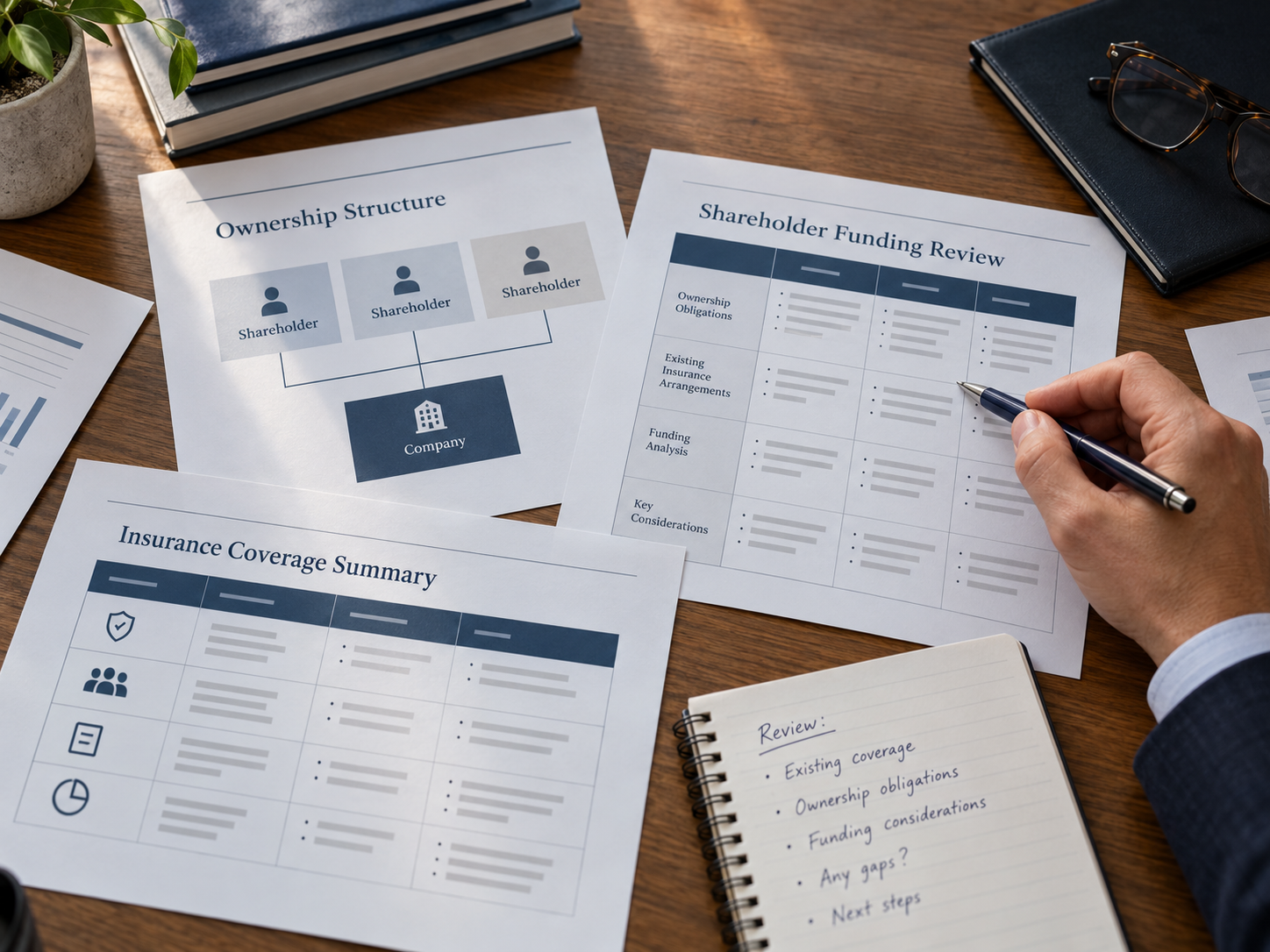
A shareholder agreement can define what should happen when ownership changes, but that does not mean the funding still fits. PLA helps owners understand the obligation, review the current arrangements and determine what deserves attention before making a funding decision.

A shareholder or buy-sell agreement establishes ownership obligations and legal mechanics.
Funding addresses how those obligations may be financed if an ownership event occurs.
The two should be reviewed together, but their roles remain distinct.
Defines ownership mechanics, obligations and what should happen under the agreement.
Addresses how a purchase or continuity obligation may be financed.
Insurance, legal and tax decisions should be coordinated without allowing one discipline to substitute for another.
A funding arrangement can become outdated even when the original agreement is still in place.
Ownership changes can affect obligations, insured amounts and who may need to be covered.
Changes to the agreement may change the funding question.
Growth, restructuring or a change in ownership value may create a reason to review prior coverage or funding assumptions.
The business may have continuity risks beyond shareholder purchase obligations.
Ownership transition can change who is exposed, who receives proceeds and what funding may be required.
Older arrangements may deserve review when ownership, business circumstances or obligations have changed.
Clarify the ownership structure, agreement context and what needs to be funded.
Look at existing policies, ownership, beneficiaries and current funding.
Identify what requires analysis before choosing a structure.
Review appropriate structures and insurers based on the facts.
Work with legal and tax advisors where needed, and review again when ownership changes.
What happens when an ownership event creates a purchase obligation?
What happens to the business if a critical person can no longer contribute?
These risks can overlap, but they solve different business problems.
Buy-sell and key-person planning can involve insurance, legal and tax decisions that need to remain clearly separated and coordinated.
“When we needed insurance to fund our partners' buy-sell agreement, Private Lane didn't just bring us one quote. They researched and compared several insurers and came back with the policy that truly fit our structure. That kind of diligence is exactly what you want on something this important.”
Buy-sell insurance can help fund obligations created by a shareholder or buy-sell agreement. The appropriate structure depends on the agreement, ownership arrangement and business circumstances.
Funding should be revisited when ownership changes, the shareholder agreement changes, business value or circumstances materially change, or existing coverage may no longer align with the obligation.
Buy-sell funding focuses on ownership obligations between shareholders or partners. Key-person insurance focuses on the financial or operational impact if someone important to the business can no longer contribute as expected.
A new owner can change the ownership structure, obligations, insured parties and funding requirements. The agreement and existing arrangements should be reviewed before assuming the previous structure still fits.
PLA can review the insurance funding and relevant policy options. Legal advisors should confirm agreement language and ownership mechanics, while tax or accounting implications should be confirmed with the appropriate professional advisor.
The goal is not simply to put a policy in place. It is to make sure the funding still fits the ownership obligation and is coordinated with the right professional advice.
Tell PLA what has changed in the ownership structure or funding arrangement. PLA will follow up to discuss the obligation, existing coverage and the appropriate next step.
Existing client? Contact PLA directly or use your regular review process.
Explore Executive & Individual Insurance